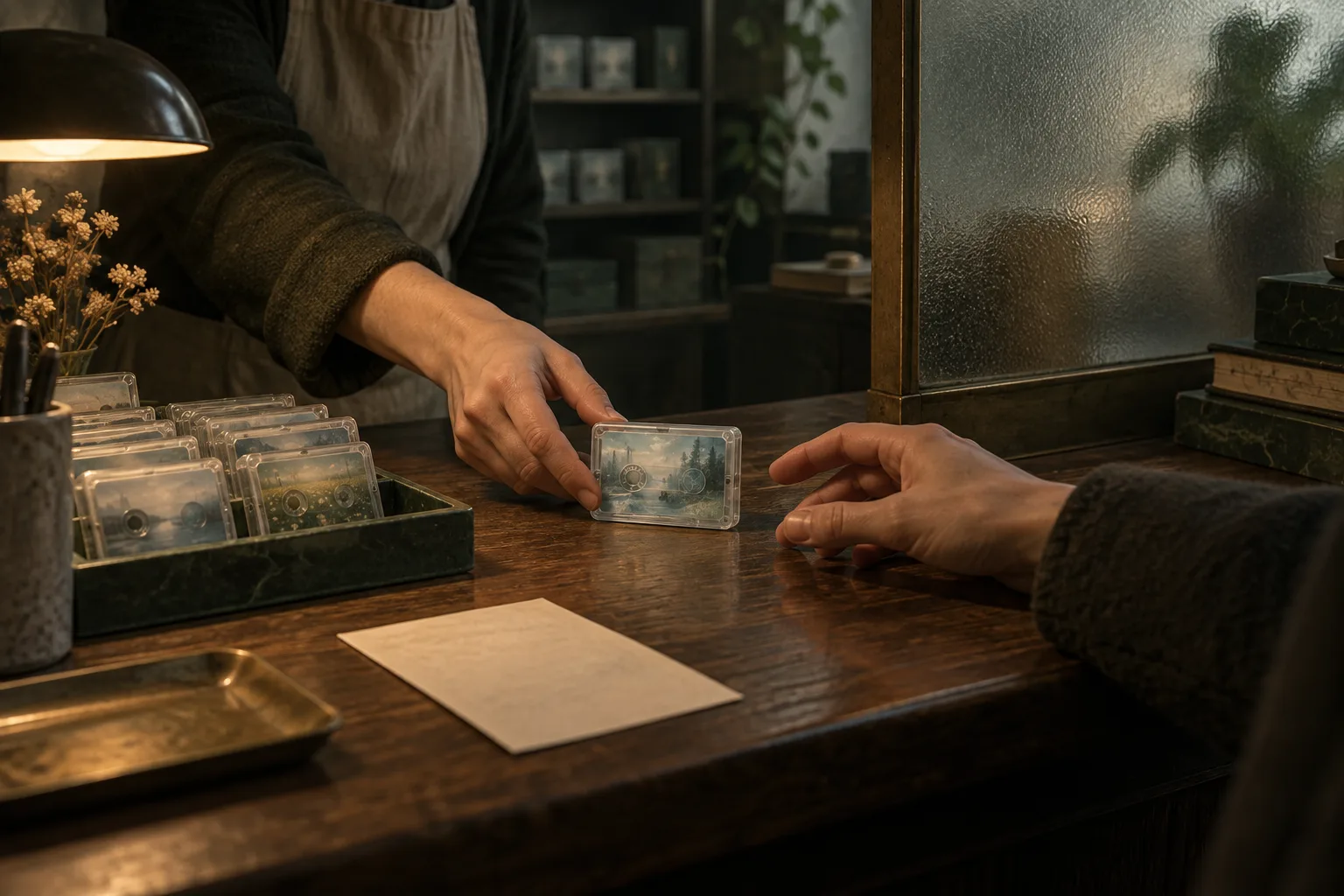
You find an old photograph of yourself laughing at something nobody in the room can now explain. You recognize the face. You know where the picture was taken. The moment itself is gone.
It would be strange to conclude that the child in the photograph was therefore someone else. And yet, when we imagine a fictional character losing their memories, we reach quickly for the phrase: they are no longer the same person. What are we actually claiming?
One phrase, several questions
Personal identity can mean the qualities we feel define us. It can also refer to a different philosophical question: what makes a person at one time the very same individual at another? The Stanford Encyclopedia of Philosophy distinguishes these questions and describes several competing answers; it does not present a single settled theory.
Someone can change profoundly in temperament, commitments, or self-understanding while still being the person whose life changed. Saying 'you have become a different person' in ordinary conversation need not mean that one individual literally ceased to exist and another took their place.
Background: Stanford Encyclopedia of Philosophy — Personal Identity
The promise nobody remembers
For a fictional thought experiment, imagine a person who has forgotten making a promise. Their friend remembers it vividly. A signed letter confirms that it happened. Does the promise still matter?
There is no need to solve every question about identity before recognizing the friend's disappointment. The relationship has a history, and that history has consequences for more than one person.
But the reverse also matters. A forgotten promise cannot become an excuse to deny the changed person all agency. A compassionate response might acknowledge the past without treating their present wishes as irrelevant. This is a moral tension for a story to explore, not a rule for managing anyone's medical condition.
The archive is not the experience
Give the person a perfect notebook: names, dates, every meal and argument. They can learn what happened. They still cannot necessarily recover what it felt like.
This makes the archive a particularly interesting object in fiction. It can preserve evidence while leaving intimacy absent. It can answer a factual question and intensify an emotional one. 'We were happy here' becomes a sentence the character understands without recognizing themselves inside it.
The notebook also has an author. Which moments were recorded? What was omitted? A supposedly complete account may quietly carry somebody else's priorities.
Would a perfect copy settle it?
Now give a second fictional person the same notebook, then grant them all the memories it describes. Both people can tell the same story about their childhood. If that were enough to establish identity, which one would be the original?
The example does not prove that memory is irrelevant. It shows why resemblance and being the same individual are different claims. A copied history could explain a person’s confidence about who they are without settling whether that confidence identifies the original person.
For a story, the emotional consequence may be sharper than the abstract puzzle. Two people might arrive expecting the same loved one to recognize them. The loved one cannot resolve the encounter simply by asking a question only the original would know. This is an invented case, not a claim that memories can currently be copied between people.
Knowing that something happened to you is not always the same as recognizing yourself in it.
Leave room for the person
Stories about memory can become cruel when they treat recollection as a person's entire value. Care, dignity, and the possibility of a meaningful present should not depend on winning a philosophical argument.
A richer story lets several kinds of continuity coexist: a body moving through time, relationships sustained by others, habits, values, and memories that do not always agree. The tension between them is more interesting than a simple declaration that the person is either unchanged or gone.
The question is worth keeping open. So is another one: when somebody changes, can we make room for who they are now without pretending that who they were never mattered?
Part of Beyond the Known, an independent journal by Arin Vale.
Read our editorial approach