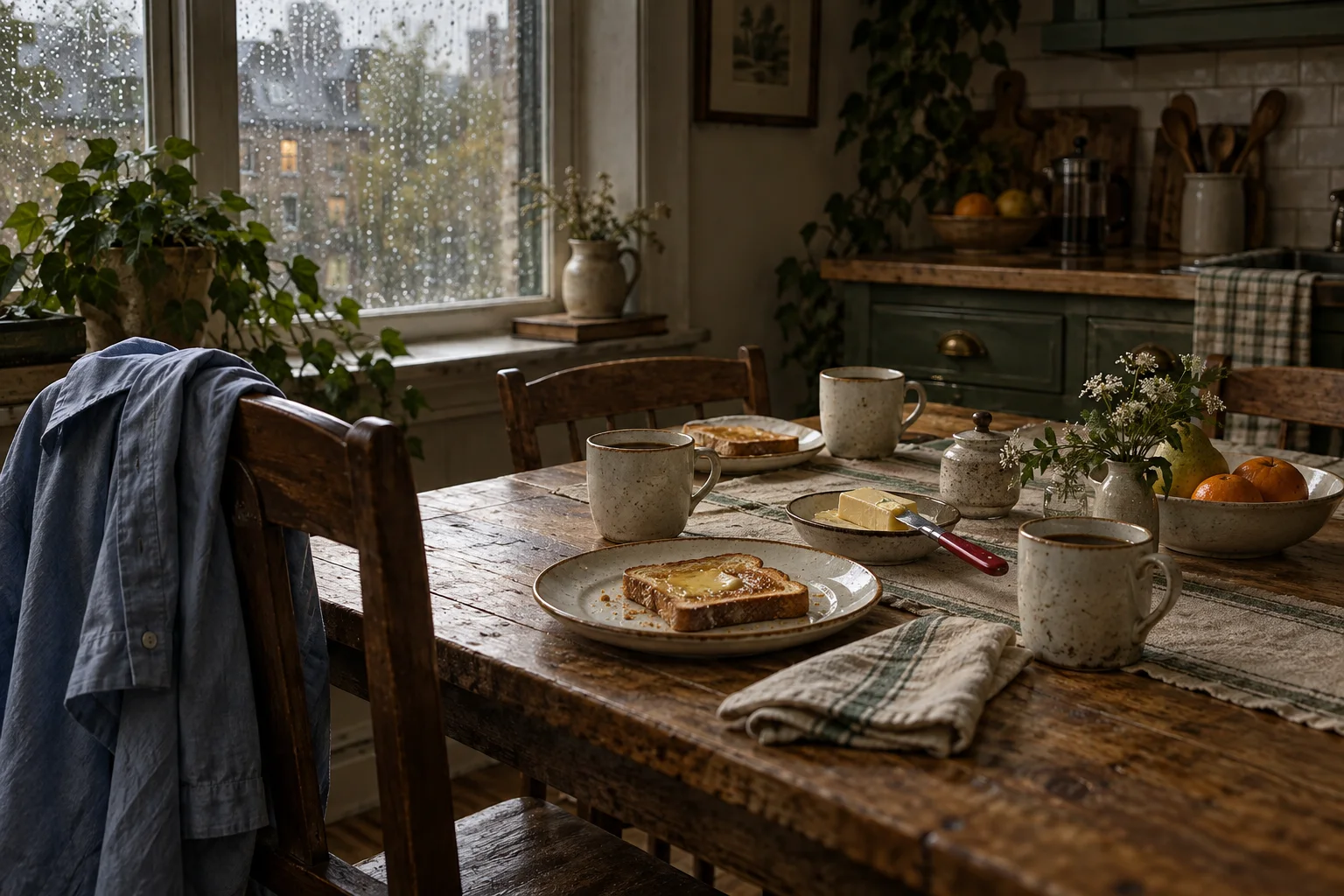
A fictional world can arrive as a map, a dynasty, or a page of invented vocabulary. It can also arrive as a breakfast somebody cannot afford.
Follow the meal backward. Who grew it? How did it get here? Is eating alone ordinary or insulting? Who has the time to sit down? Which ingredient would the character miss if they had to leave?
The answers reveal trade, status, custom, and attachment without requiring a lecture on any of them.
Make the detail do a job
An unfamiliar fruit is decorative until somebody chooses it, refuses it, or cannot obtain it. A custom becomes a scene when someone breaks it. The world starts to matter when it changes what a character can do.
This is a useful revision exercise: take one paragraph of background explanation and find the smallest conflict that would make its information necessary.
You do not need to disguise every explanation. Sometimes a direct sentence is the cleanest choice. But it helps to know whether a detail gives the reader a handle on the scene or asks them to carry luggage they will never unpack.
Begin with breakfast. Let somebody be late. Let the kettle belong to the wrong person.
Then discover which parts of your world's grand history have found their way into the kitchen.
Part of Beyond the Known, an independent journal by Arin Vale.
Read our editorial approach