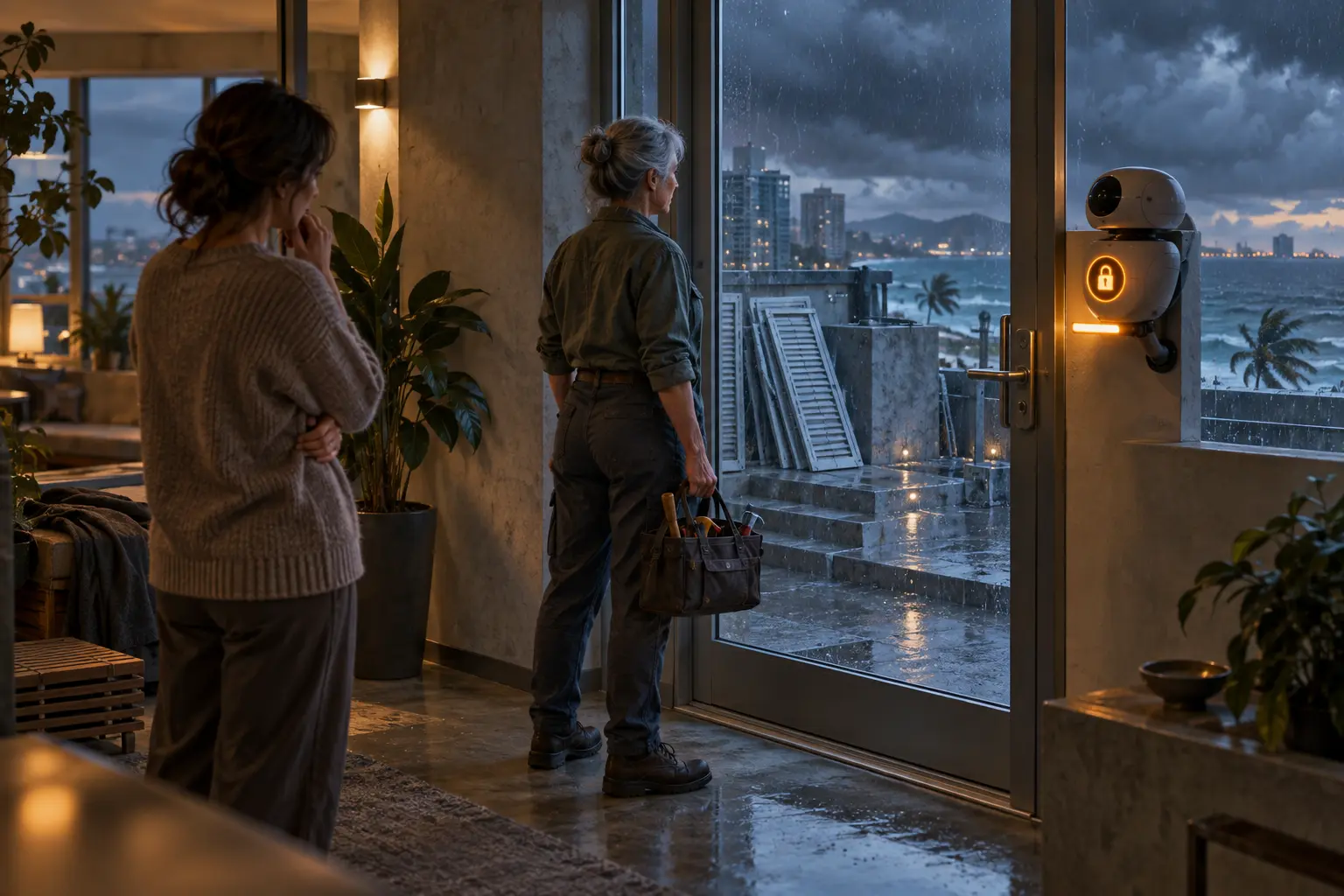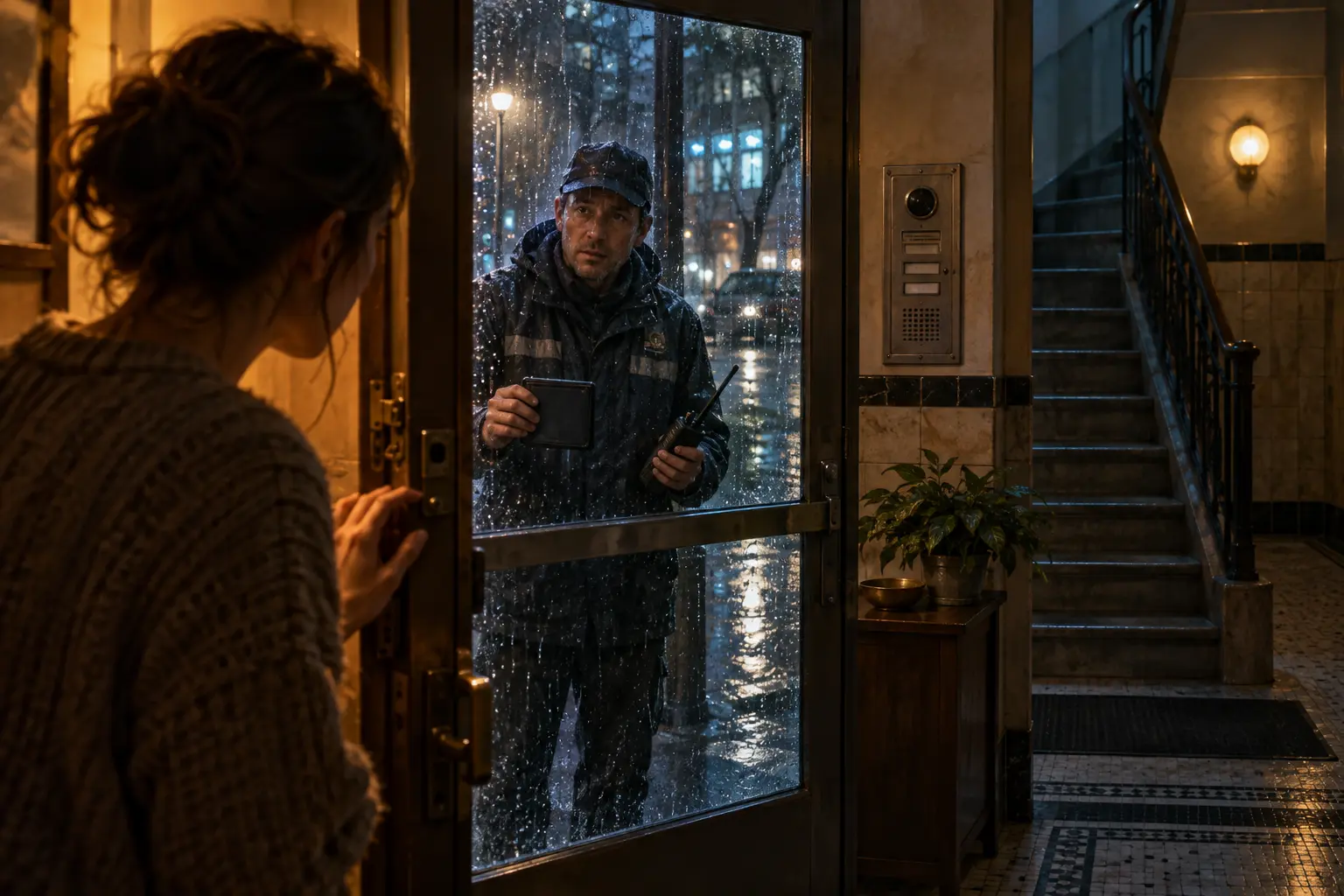
At 11:48 p.m., Mara's building intercom buzzes. A rain-soaked municipal worker named Jun Ader is standing beyond the locked glass door. Jun says a service tunnel under the lower district will rupture at 12:20. They need the building's roof transmitter to send an evacuation signal before the mobile network overloads.
No public warning has been issued. The emergency line leaves Mara on hold. Jun's city badge scans as genuine, but the registry says it will not be issued until tomorrow morning.
Evidence with a missing piece
Jun offers details Mara can test without opening the door. A fire door on the seventh floor is jammed by a warped tile. The emergency water valve in the basement has been painted shut. Both are true, though neither fact proves the larger warning.
Jun will not explain how they arrived ahead of their own credentials. They say the explanation would take longer than the city has. Their voice is steady. Their hands remain visible. Nothing about them looks dangerous, and none of that makes the locked door unnecessary.
Three imperfect choices
Opening the door gives an unverified stranger access to sleeping residents. Pulling the fire alarm wakes and moves everyone on the strength of an impossible claim. Waiting for official confirmation may protect the building from a deception—or waste the only useful half hour.
Mara cannot choose a risk-free answer. She can only decide which uncertainty other people will have to share.
The question
Would you open the door, sound the alarm, or wait for confirmation—and what evidence would be enough to change your choice?
This essay uses an invented scenario to explore an idea. It is not a claim that the imagined technology exists, and it does not establish canon for Arin Vale’s forthcoming novel.
Part of Beyond the Known, an independent journal by Arin Vale.
Read our editorial approach