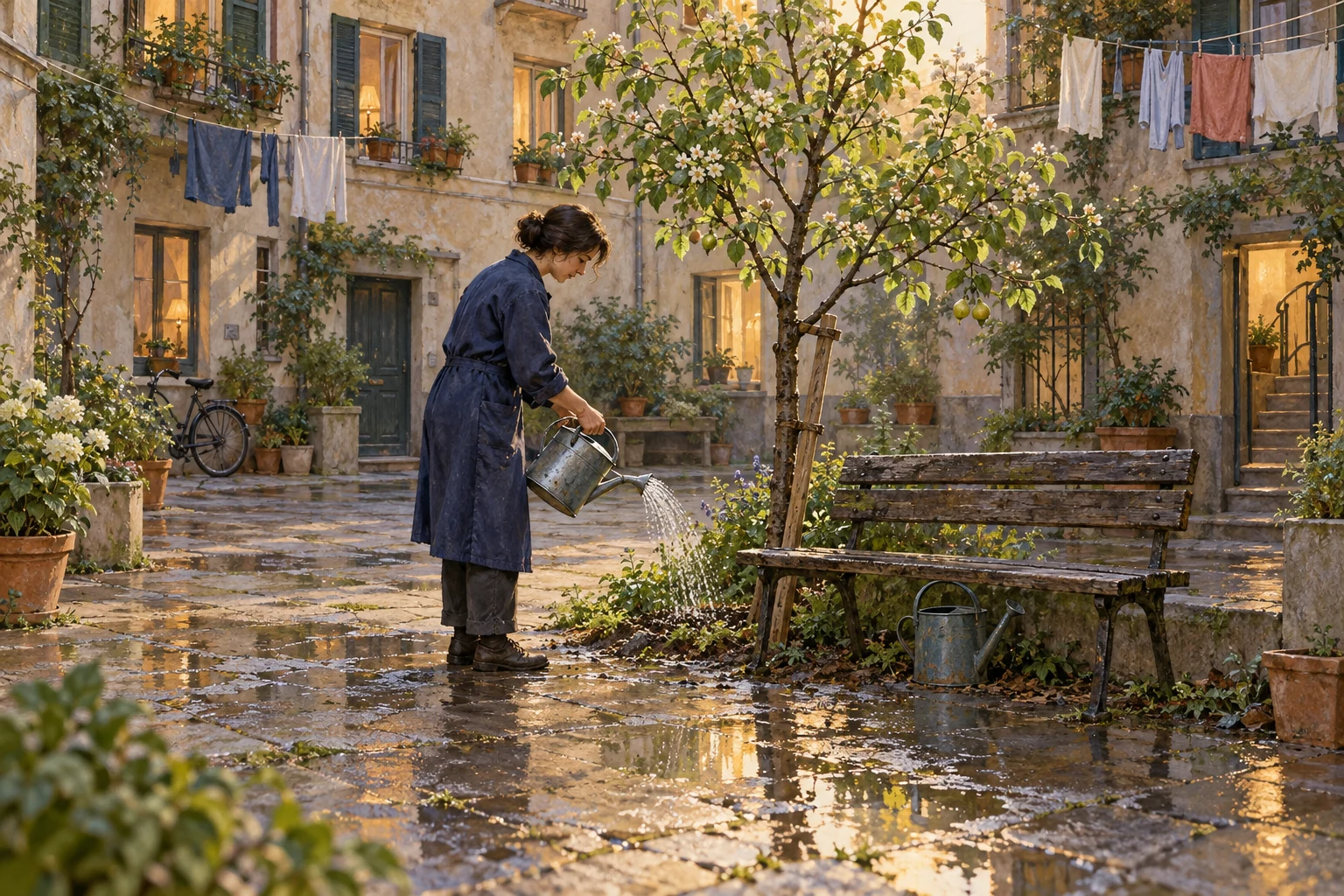
On a long walk home, Laila pauses outside a café. Through the glass she can see empty chairs and a menu taped to the door. She checks the price of tea, then moves on. She isn't thirsty. The grocery bag has left a red mark across her palm, and she would like to sit down.
A bank, a pharmacy, and a dry cleaner occupy the next block. There are plenty of places to enter with a purpose. None offers a place to stop without explaining herself.
It's a small inconvenience on a good day. On a painful or exhausting one, it changes the route home.
The small permission
A public bench offers something easy to overlook: permission to be present without paying. Someone can check directions, wait for a friend, or sit quietly because their feet hurt. Nobody has to approve their reason.
We sometimes treat the ability to move freely as proof that a place is welcoming. But a person who has to keep moving isn't entirely free to use it. Rest is part of how people inhabit a neighborhood. Its absence weighs more heavily on someone who cannot simply walk another ten minutes.
Someone still has to make room
Businesses shouldn't be expected to solve this alone. A small café pays for every chair. Staff must keep aisles clear and serve people who came to eat. It's reasonable to set limits on seating; they aren't running a public park.
That makes the shortage of places to rest a shared design choice rather than an individual shopkeeper's failure. A bench costs space. It needs maintenance. Its location and height matter. A low wall might be usable for one person and impossible for someone who needs a backrest or armrests to stand again.
There is a temptation to call this minor because no single missing bench looks catastrophic. But a neighborhood is made of such details, and so is the experience of being welcome in it.
The quiet test
At the small park at the end of the block, Laila finally finds a low stone wall. She sits for six minutes, careful not to let her grocery bag tip into the flowerbed. Getting up is harder than sitting down.
Sometimes a stranger will offer a chair, and that's a kindness worth remembering. Yet a place that relies on someone noticing your discomfort has left rest to chance. A bench would not solve every problem on this street. It would let Laila stop without asking anyone for a favor.
Part of Beyond the Known, an independent journal by Arin Vale.
Read our editorial approach